Artifacts
COGNITIVE ARTIFACT 1
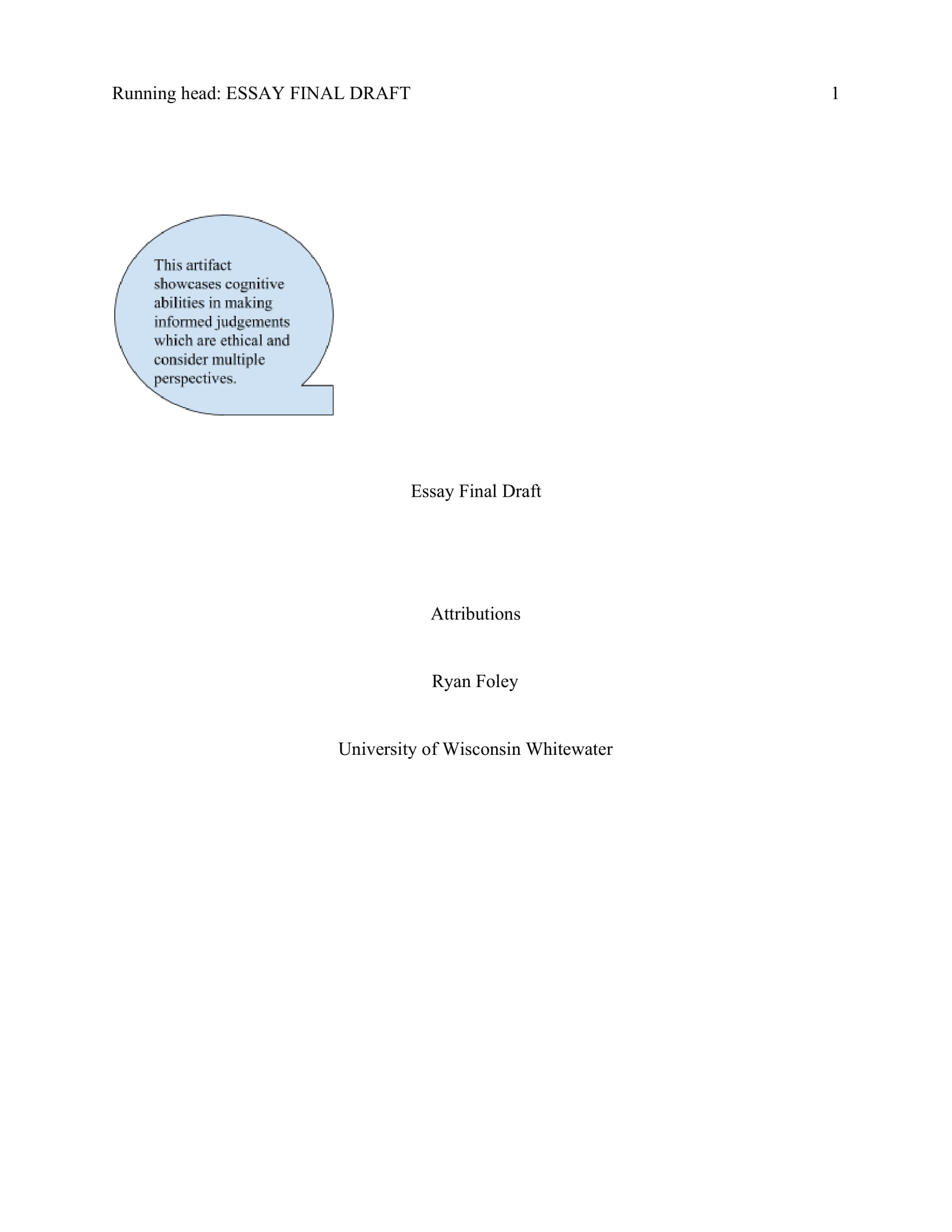
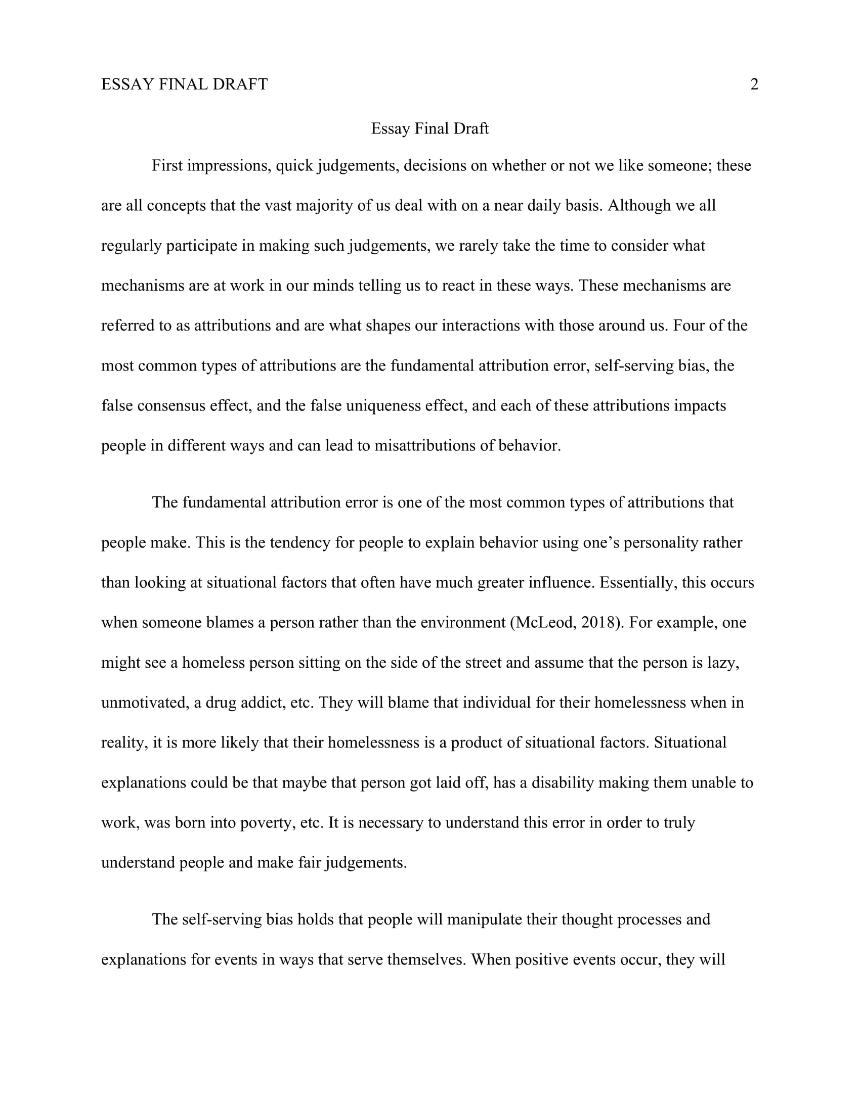
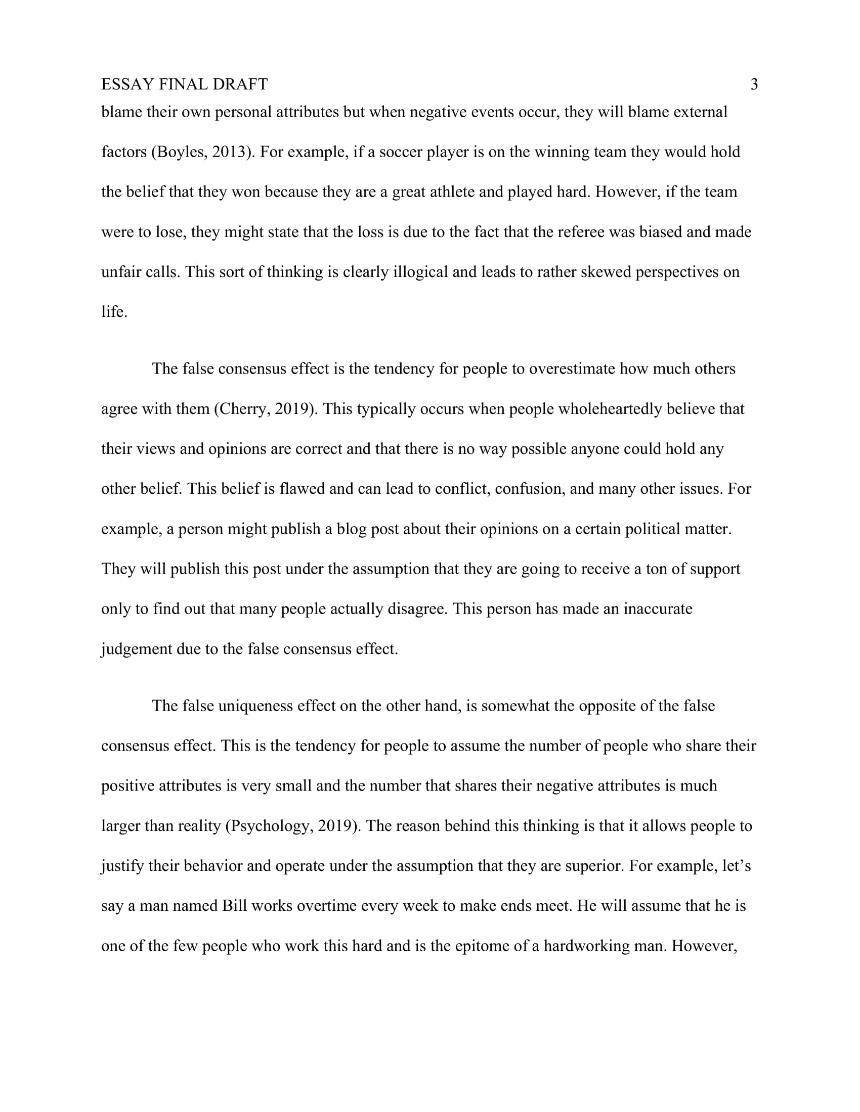
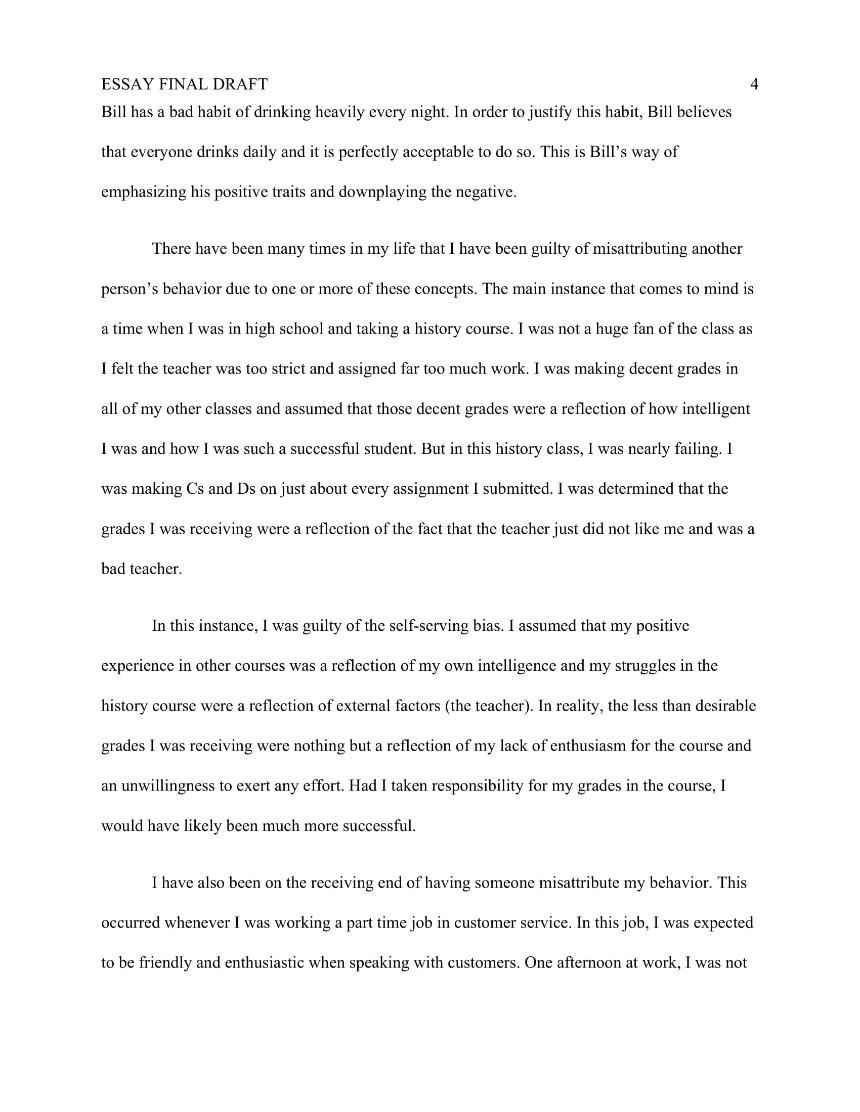
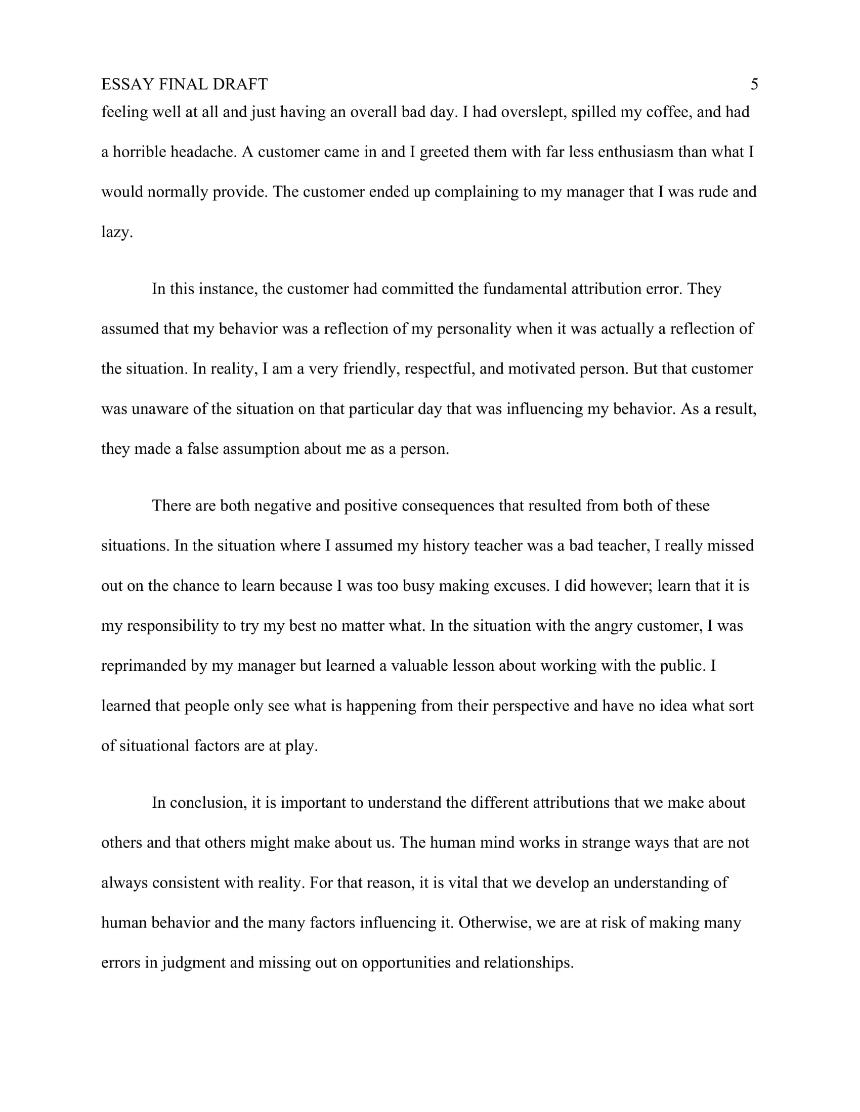
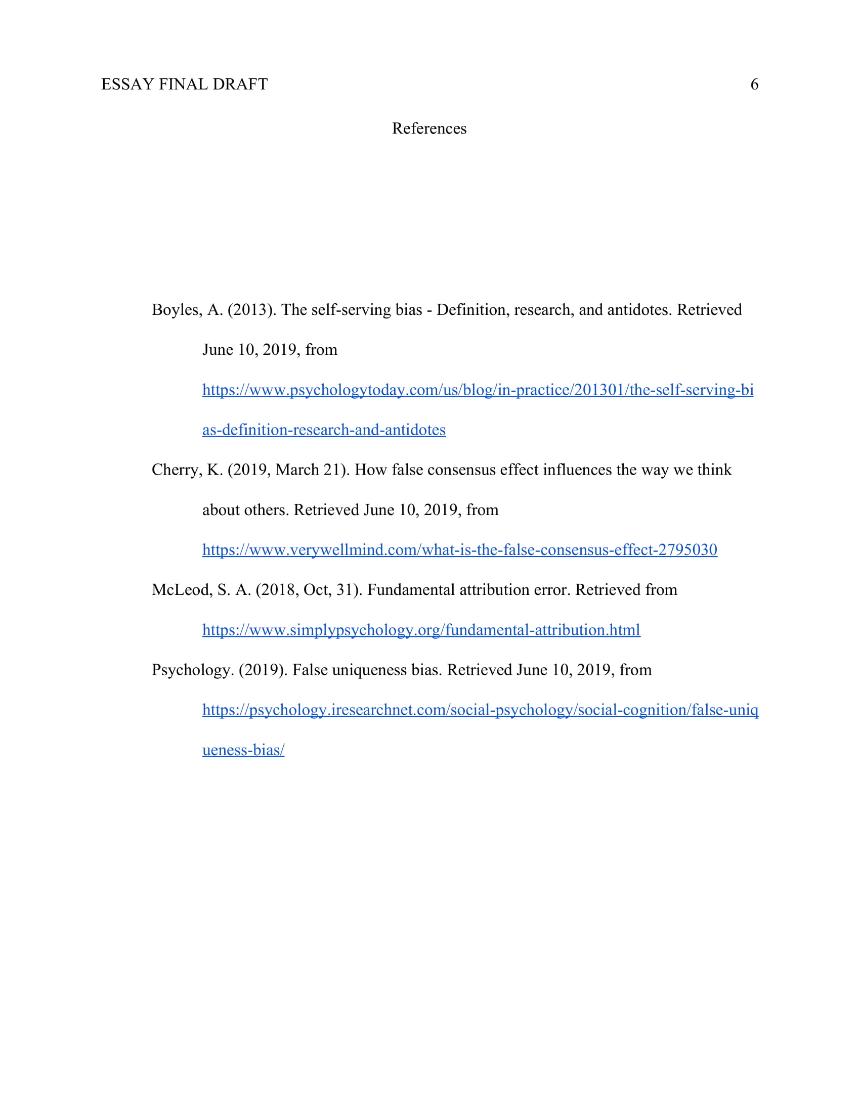
The Cognitive Artifact 1 is relevant is displayed to showcase Ryan Foley's ability to critically think and incorporate liberal perspectives into how judgments are articulated. Important aspects of liberal studies in correlation to Artifact 1, identify the vital aspects of interpersonal traits and management skills, to a degree, in incorporating cultural values and others' perspectives when forming an attribution judgement. In relation to the marine industry with regards to a fisherman, Cognitive Artifact 1 showcases the importance of interpersonal and cross-cultural communication aspects and how such is necessary in the occupation of working with a diverse set of people. Cognitive Artifact 1 illustrates Foley's characteristics and traits as entailing someone who is capable of understanding others. Focal aspects in understanding others are identified as Foley's ability in the recognition of how misattribution of others' behaviors should be carefully observed so such is avoidable. Overall, Cognitive Artifact 1 shows how Foley's characteristics, traits, interpersonal skills and management skills are helpful in the chosen career pursuit of a fisherman, as a fisherman requires strong interpersonal and people skills.
COGNITIVE ARTIFACT 2
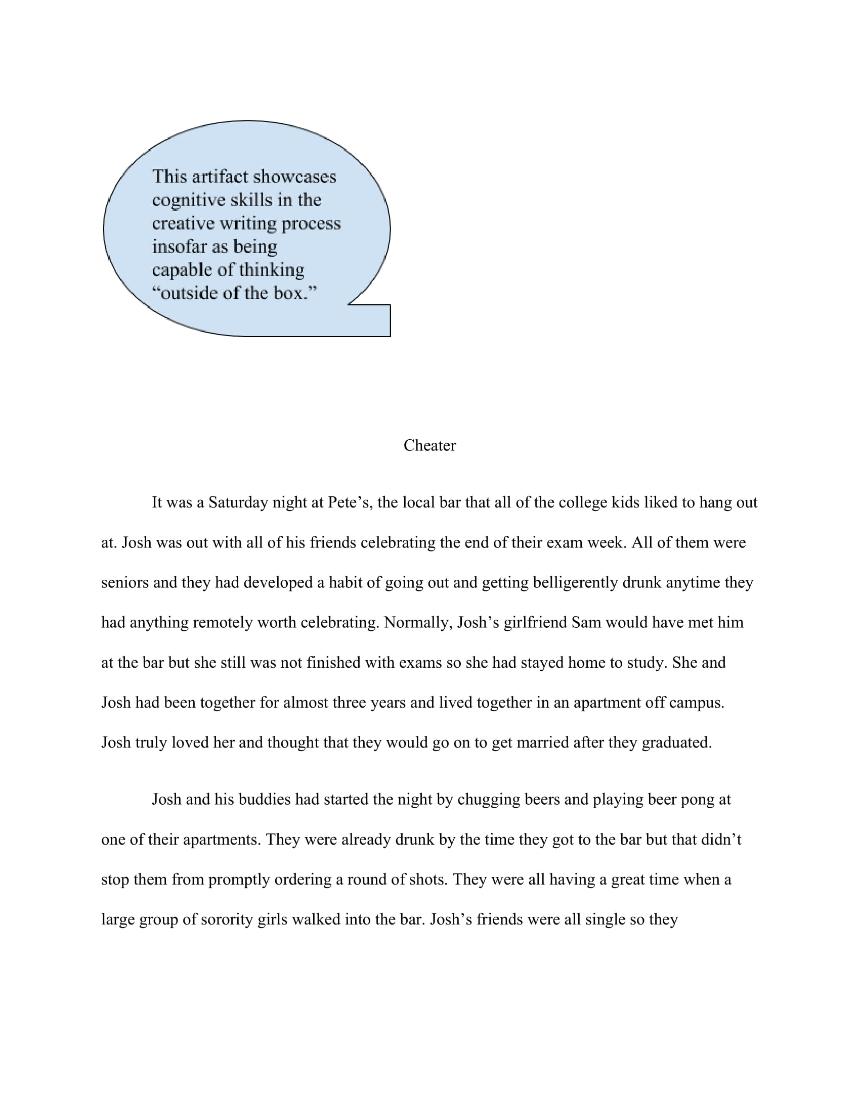
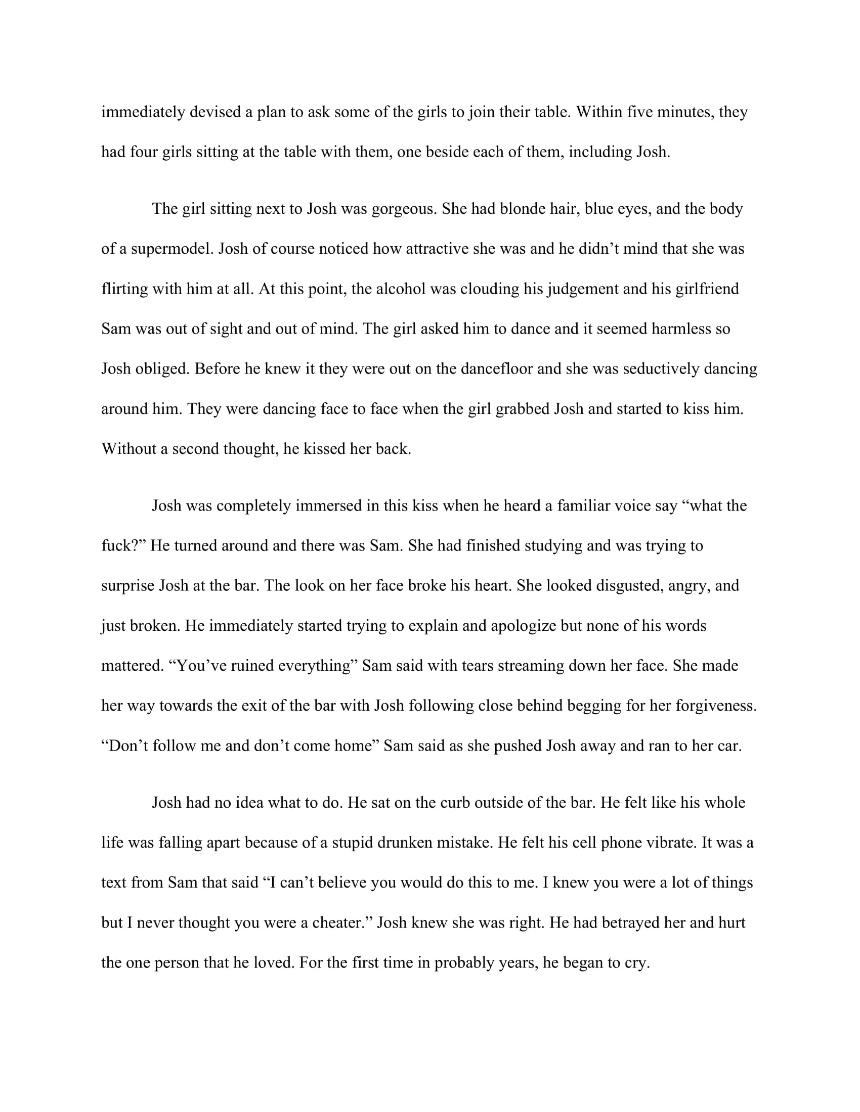
Cognitive Artifact 2 illustrates Foley's ability in creative thinking, which is a process of liberal arts within cognitive skills insofar as thinking critically and understanding how social/cultural issues can become inherent among diverse demographic groups, as well as with oneself. The creative writing piece shows the internal thought processes of individuals and how individual thought processes contribute to attribution. Viewers will gain the understanding that Foley is capable of applying creative and critical thinking, which are vital practices in the liberal arts. In connection to the career of a fisherman, understanding creative thinking is important to devise innovative and systematic solutions to a problem. Cognitive Artifact 2 reinforces Foley as an individual who is creative in his ability to write, but such also demonstrates Foley's ability in thinking creatively, in general. To think creative and to apply creative thinking, is important in an occupation. Within the occupation of a fisherman, creative thinking is important in problem solving and also in making inquiries with related individuals within the marine field.
COGNITIVE ARTIFACT 3
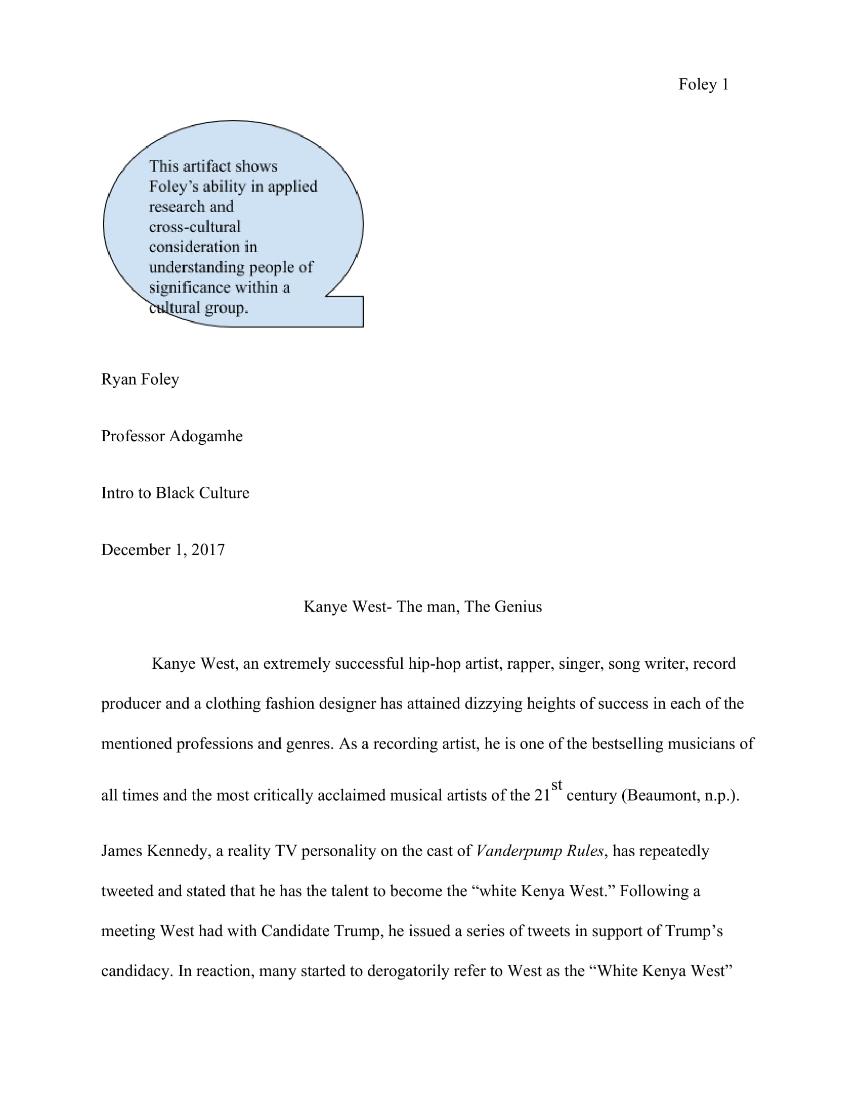
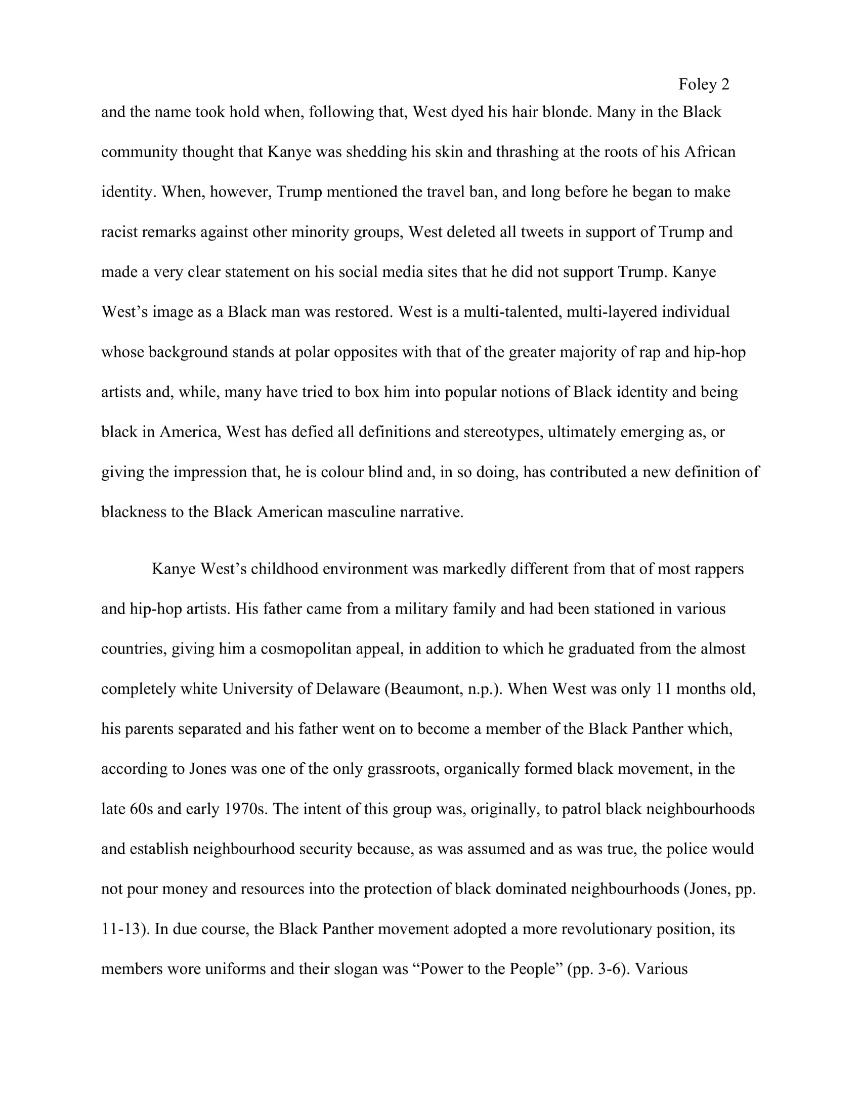
Cognitive Artifact 3 is important as an artifact because it showcases Foley's ability to demonstrate applied research that incorporates cultural specification in order to learn about different cultures and their norms as well as values. Furthermore, as a cognitive ability, reviewing and synthesizing information is an important framework in the process of understanding a topic and/or presenting a viewpoint. In connection with the career of a fisherman, the artifact is supportive in showing Foley's ability in making an effort to understand others' points of views, but also to perform research to understand the accomplishments and importance of an individual. Cognitive Artifact 3 showcases Foley's abilities in understanding cultural competencies to a thorough degree. Aside from understanding cultural competencies, Foley is quite capable of employing cultural competencies. Learning about different cultural demographics and integrating cultural aspects is vital within societal domains. Within the fisherman occupation, the observation of and integration of cultural competencies is an important aspect towards working with and communicating with individuals of different cultures, and, is, therefore, a focal quality.
SKILLS ARTIFACT 1
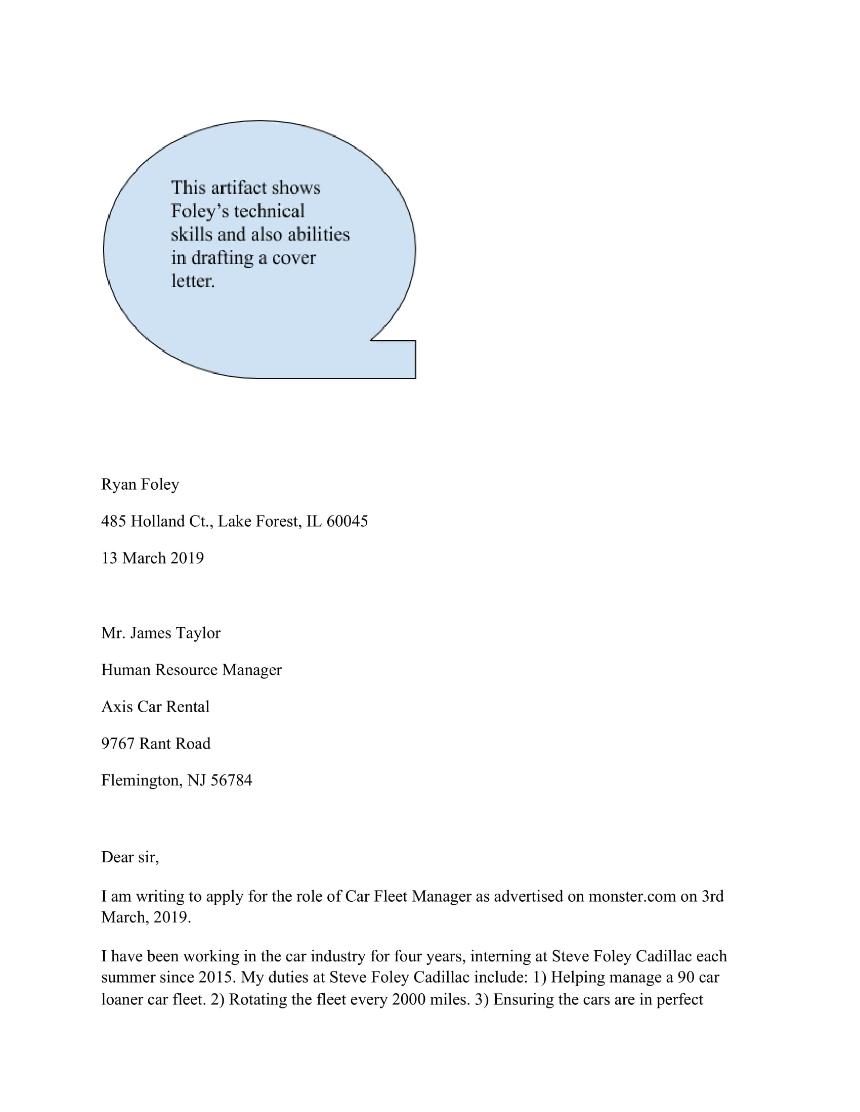
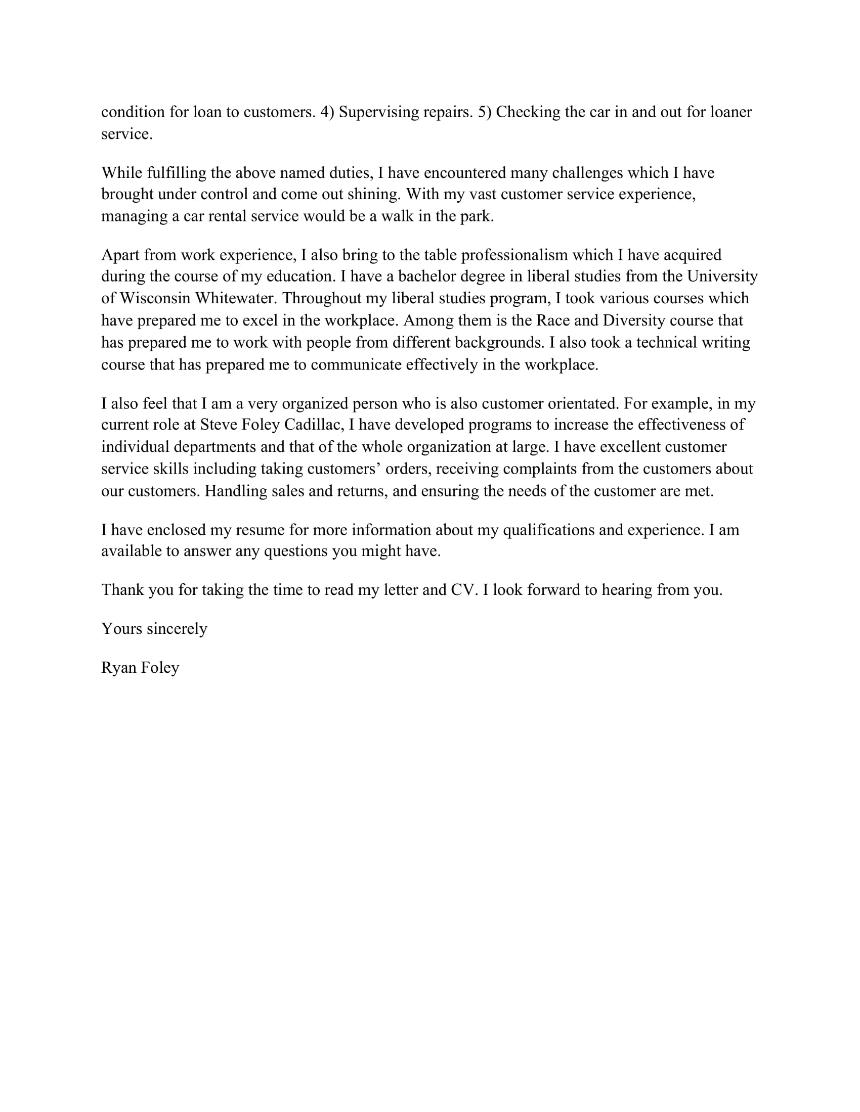
Skills Artifact 1 is a technical writing cover letter and is important to illustrate as an artifact to portray Foley's skill abilities. One focal point in skills under the liberal arts is the ability to effectively communicate with others, whether verbal or written. The cover letter not only shows technical skills of Foley, but also communicates them to a prospective employer. In connection to the occupational career of a fisherman, strong communication skills are highly necessary whether working with other staff or in preparing document reports. Skills Artifact 1 showcases Foley's abilities in illustrating abilities and technical skills. In pursuance of an occupation as a fisherman, the ability to showcase one's abilities is vital insofar as demonstrating to prospective employers that one has the ability to excel in a given skill set demand.
SKILLS ARTIFACT 2

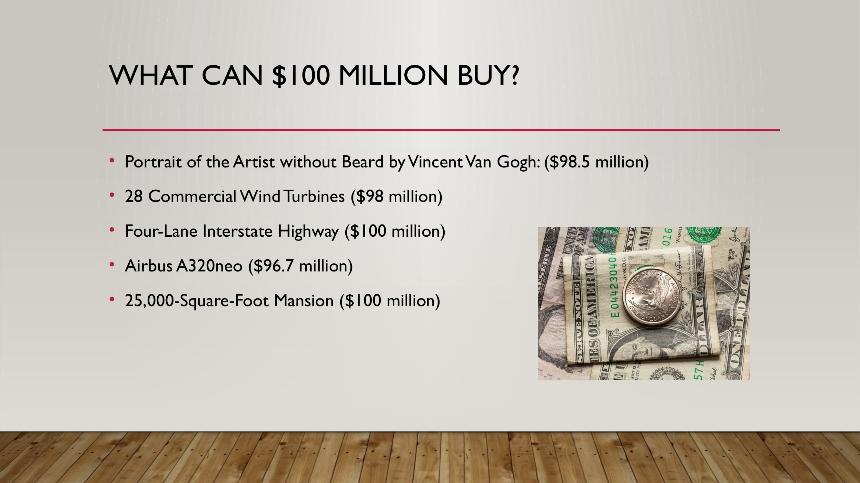
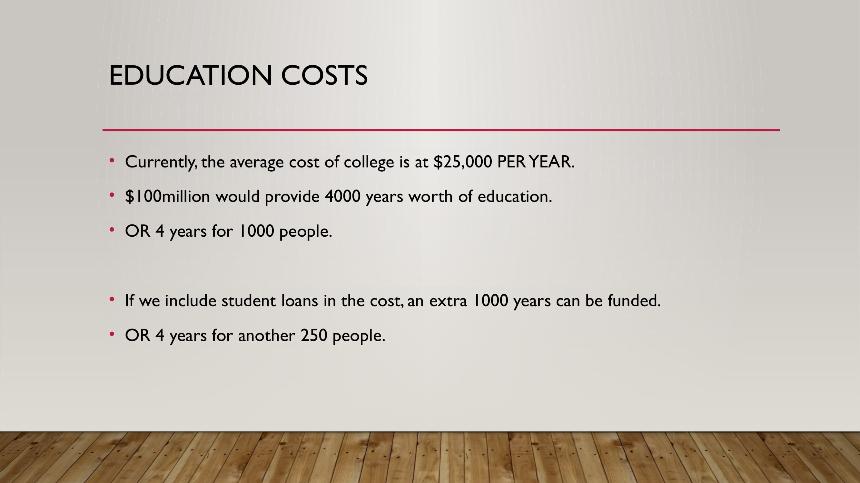

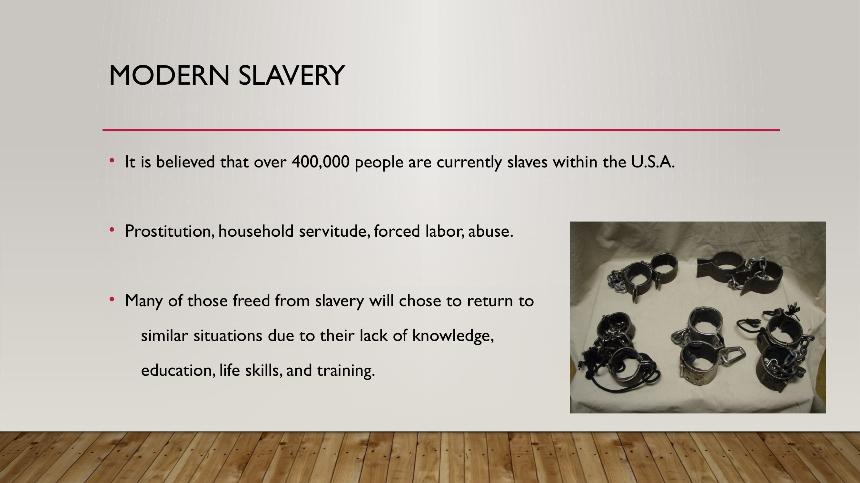
Skills Artifact 2 is a PowerPoint presentation on modern slavery insofar as trafficking, and how education and corresponding awareness of the issue of trafficking can aid in the remediation thereof. As a component of skills in liberal arts, a cornerstone practice involves analytical skills and research skills which can be used in communicating an important topic for the purpose of being informative or persuasive. In connection to the occupation of a fisherman, analytical skills and research skills are important towards the management of resources, planning, and communicating with relevant stakeholders in the business. Skills Artifact 2 showcases Foley's ability in research. Research is an important factor insofar as whichever career choice is selected. In relation to the career pursuit as a fisherman, research is important as a technical skill to understand variations in marine trends, as well as the ability, capability, and willingness to learn about new information and trends in fishing but also skills necessary.
SKILLS ARTIFACT 3
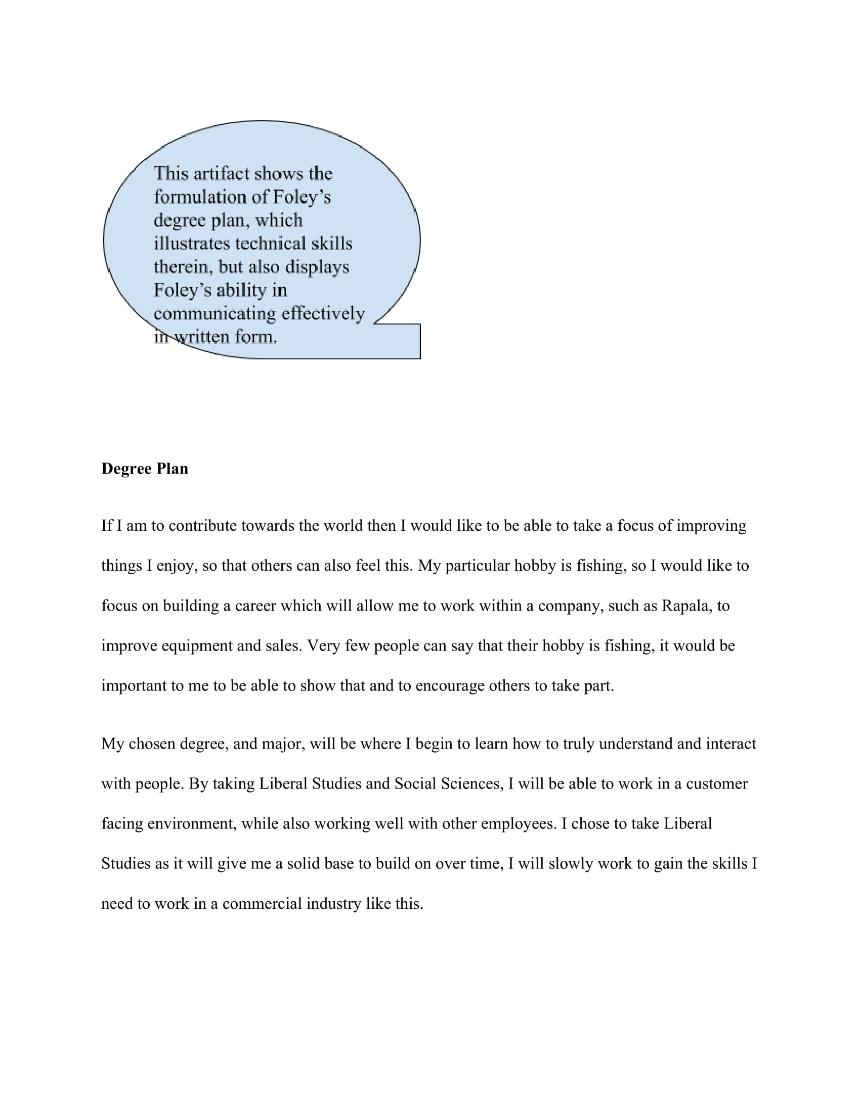
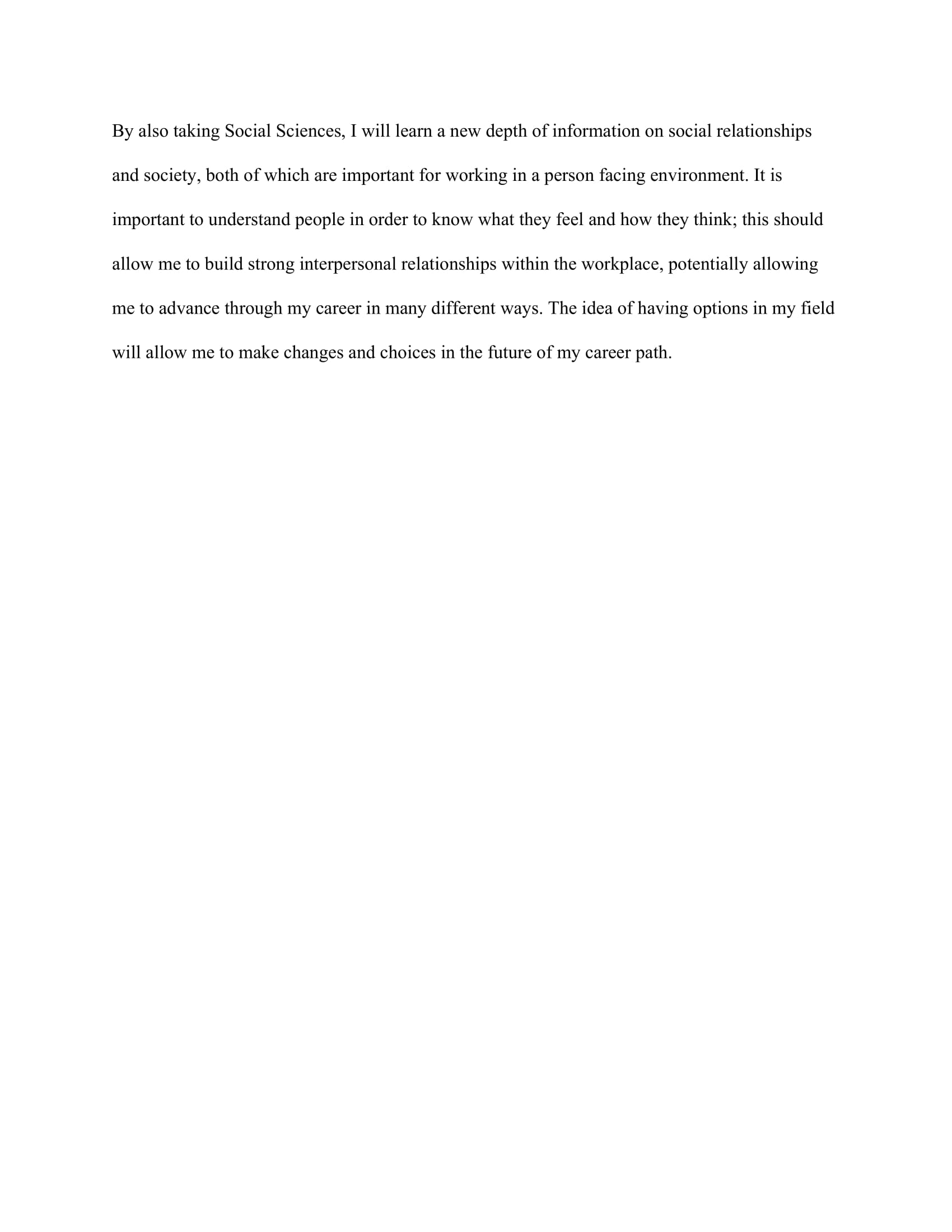
Skills Artifact 3 is a degree plan and is an important artifact for viewers to observe, so that an understanding of Foley's communication skills, and technical abilities (illustrated therein, in the artifact) is possible. The artifact relates to skills within liberal arts as it relates to the ability to communicate effectively to a given audience. The degree plan also demonstrates Foley's ability to be forward-looking and demonstrates the ability to plan goals. In connection with the occupation of a fisherman, learning how to not only effectively communicate, but also plan goals, is important. Planning goals is important to develop measurable short-term and long-term goals for business operations. Skills Artifact 3 is important in showcasing Foley's abilities in communication and technical abilities. One focal ability in communication is the ability to apply intrapersonal and interpersonal communication frameworks, and in the career of a fisherman, such is crucial in an effort to communicate with different entities that may be involved, whether through working in conjunction with a crew and captain, or whether working as an independent contractor.
CONTENT KNOWLEDGE ARTIFACT 1
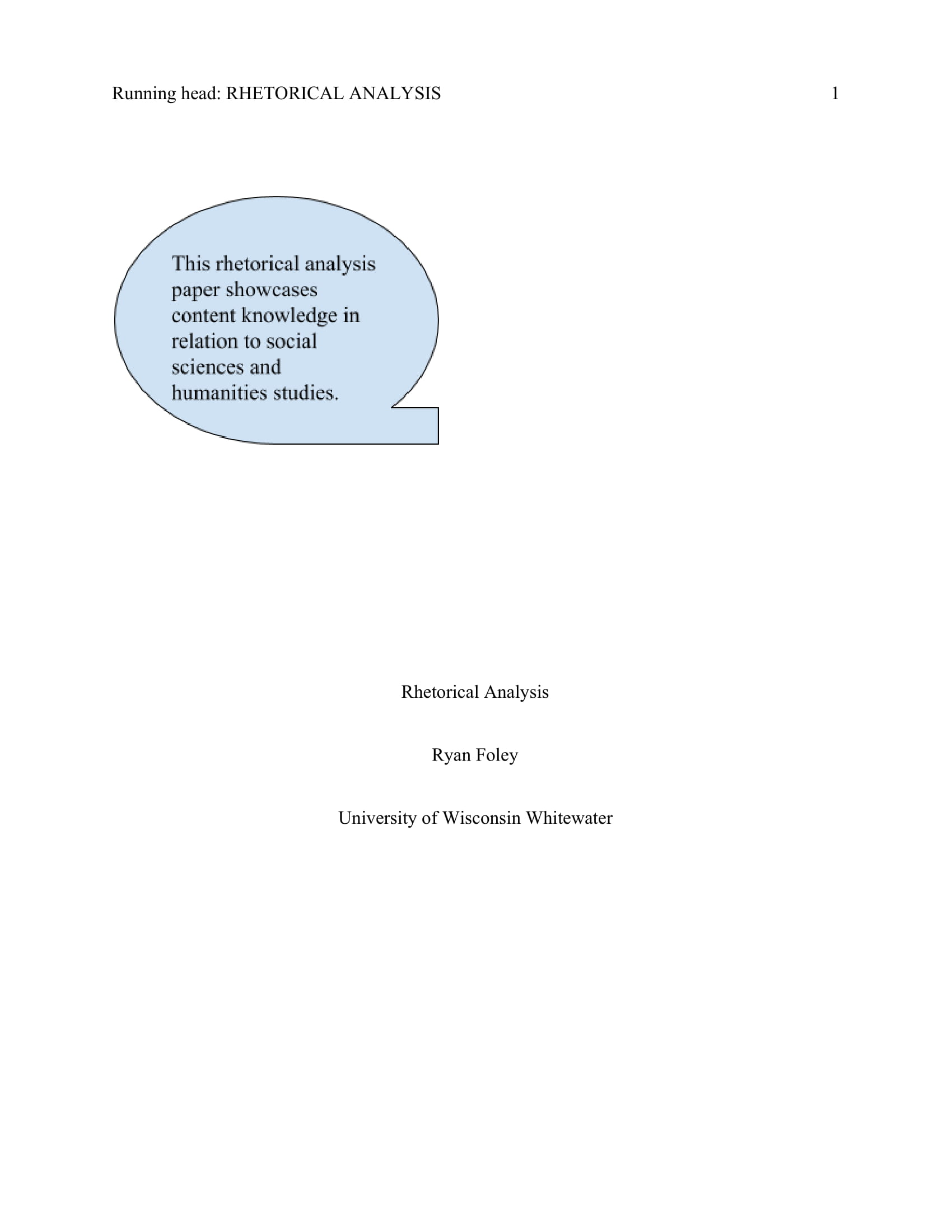
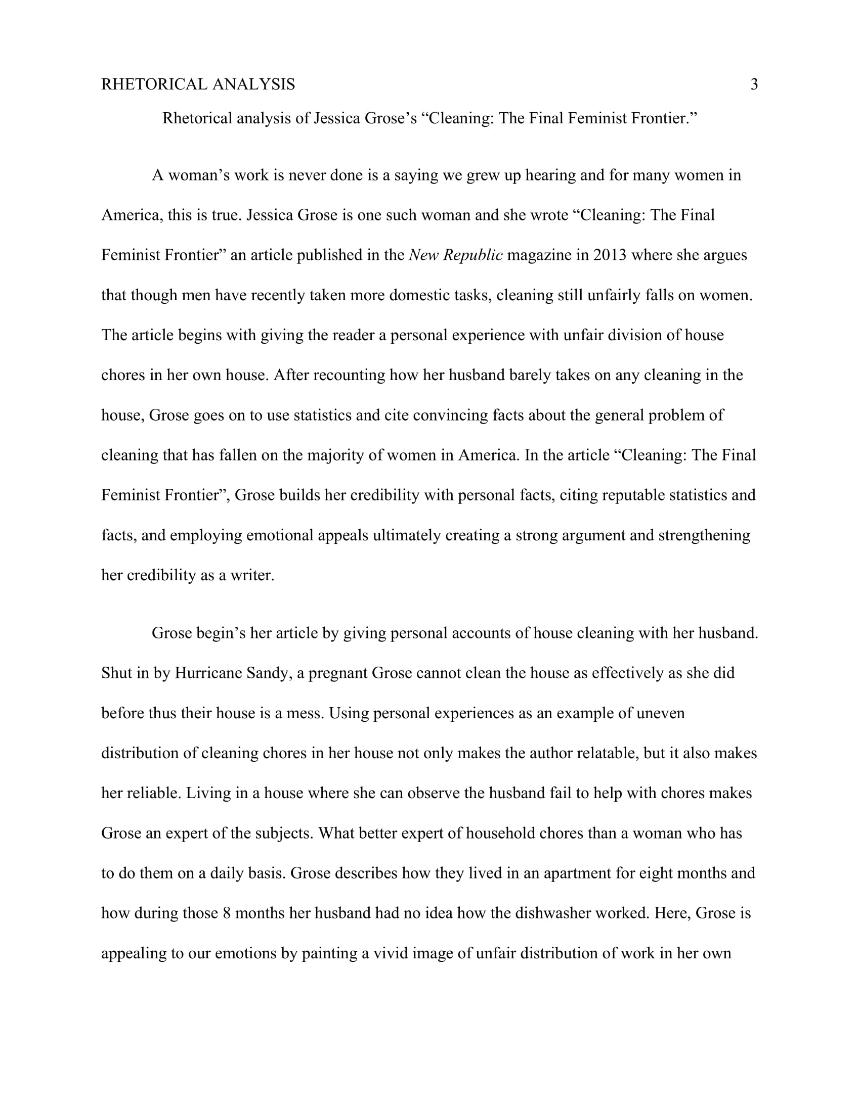
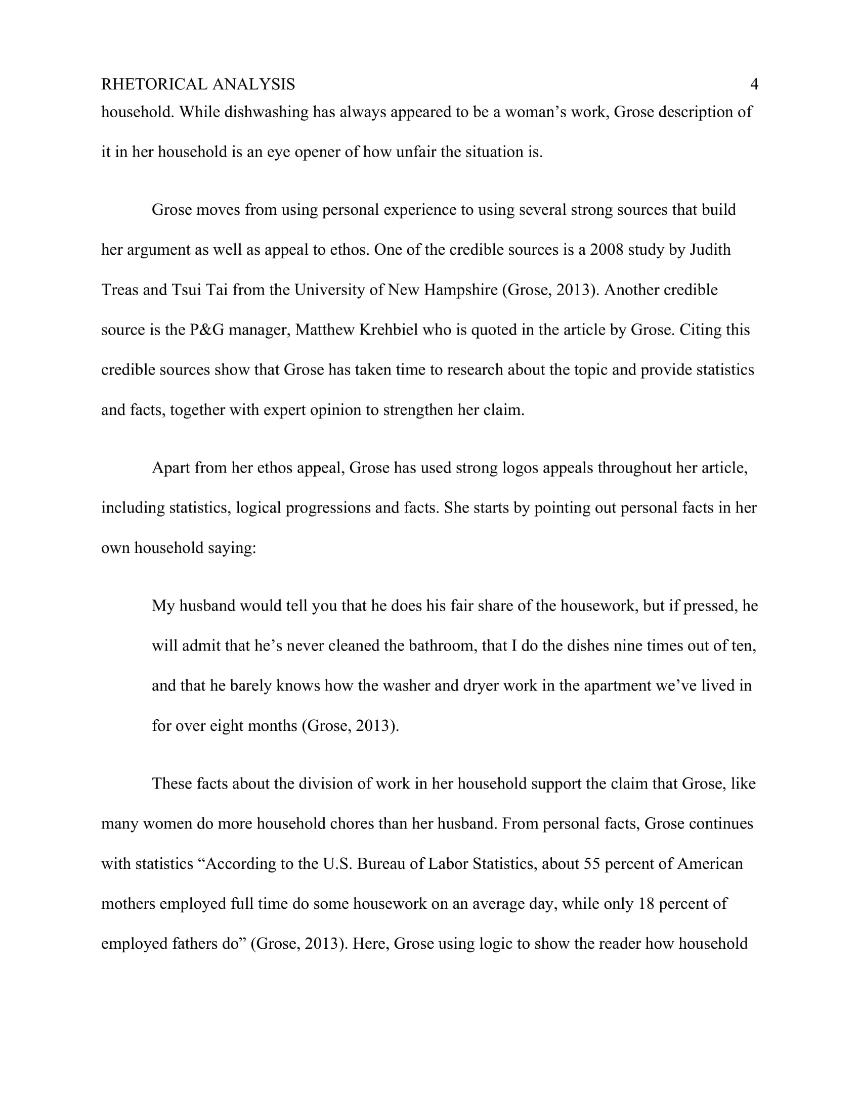
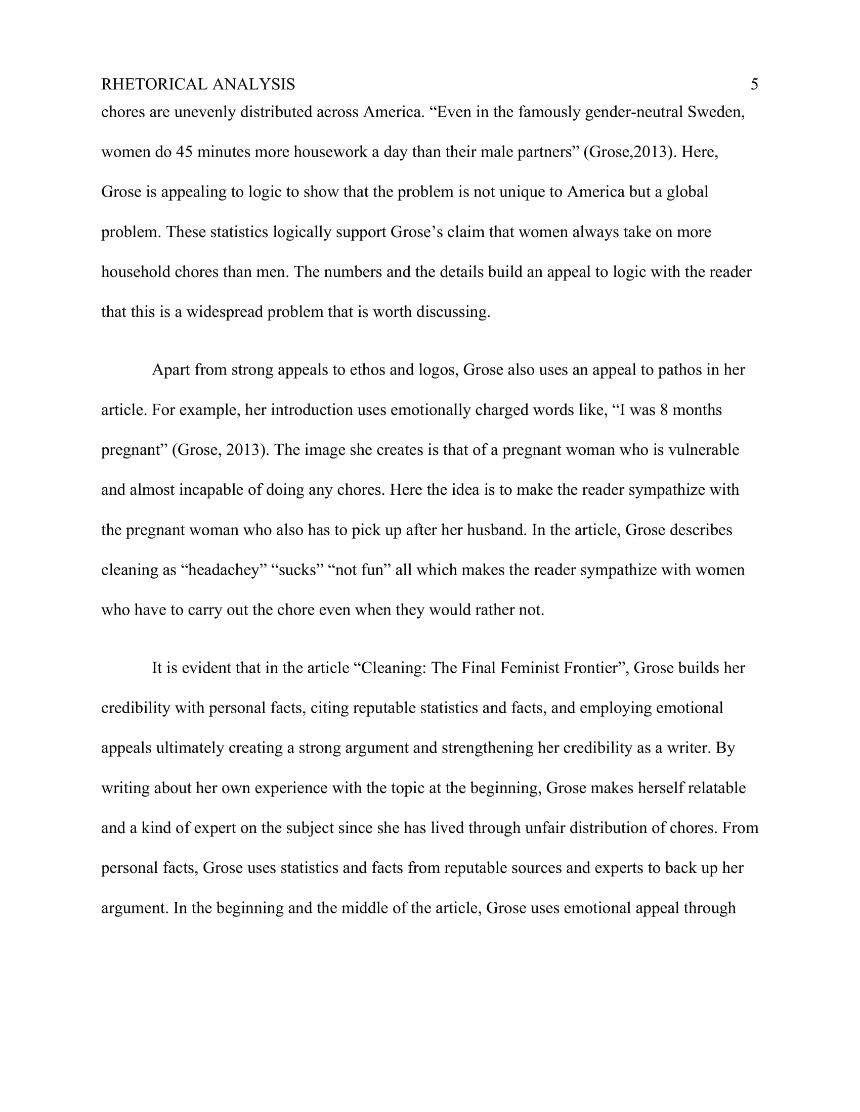
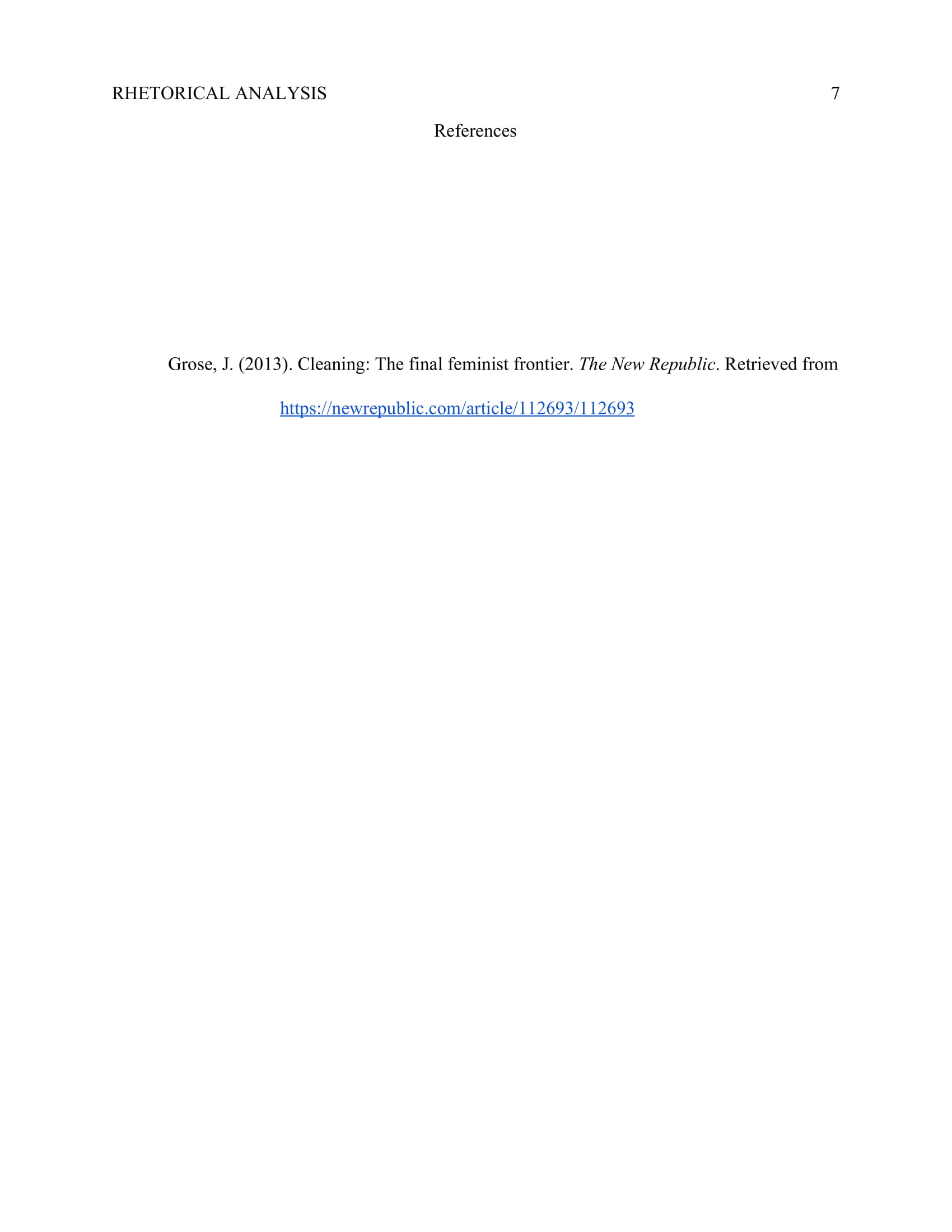
Content Knowledge Artifact 1 is a rhetorical analysis paper on women's rights and feminism. As a content knowledge artifact, the piece is appropriate in relation to becoming more self-aware of social sciences and humanities and how they are important for understanding individuals' differing perceptions, but also how to understand a given social issue and the effects posited thereof. In connection to the occupation of a fisherman, content knowledge concerning the diversity in cultural contexts and their differing norms, allows for business operations to consider cultural competencies when selling products (fish harvest) in a multicultural market or for donating harvests to community centers in need of food. Content Knowledge Artifact 1 showcases Foley's abilities as an individual who is capable of being self-aware of not only oneself, but also of others. It is quite vital, in the occupation of a fisherman, whether working in collaboration with a crew and captain, or whether as an independent contractor, that one understands how to communicate with individuals that have differing perceptions, or values. In understanding how to communicate with different individuals, workflow may remain positive and utilitarian in nature, and such is important towards the career of a fisherman.
CONTENT KNOWLEDGE ARTIFACT 2
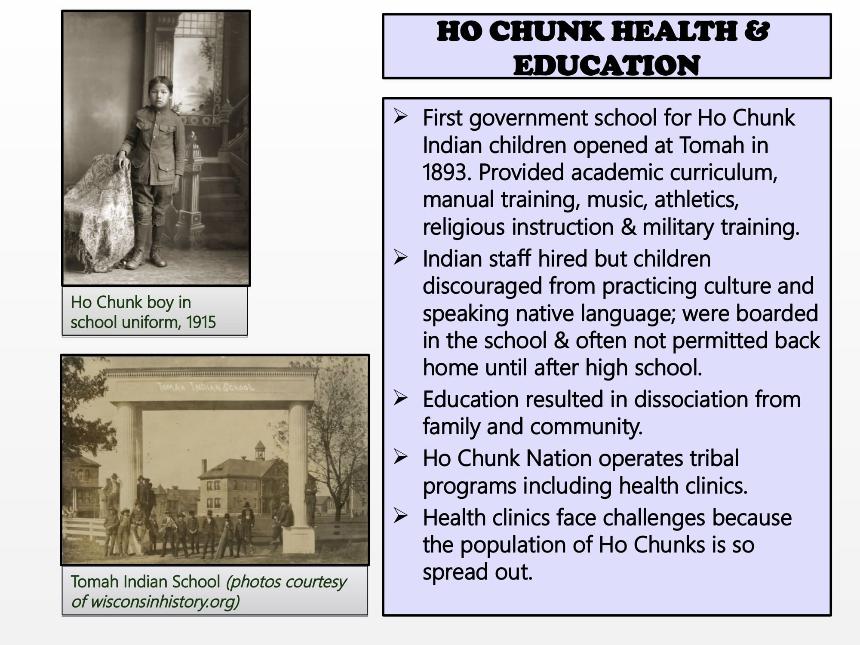
Content Knowledge Artifact 2 is a research piece in relation to social sciences and humanities under content knowledge and covers the topic of health and education for the Ho Chuck Nation Indian American tribes. The importance of the artifact is to portray Foley's skills in applied research and synthesis of research in the social sciences and humanities, which is important towards real-world skills in working with diverse cultural demographics, understanding different cultures, and further, allowing a solution to be articulated for solving challenges that may arise within a given cultural or social class group. In connection with an occupation as a fisherman, the artifact showcases how Foley can realize specific needs of a cultural group and apply social responsibility in business practices when meeting the specific need of a community, like working with families to donate fish harvests, or to provide discounts in wholesale transactions to non-profit organizations aiding a social epidemic like hunger. Cognitive Artifact 2 showcases Foley as one who is capable of applied research and synthesis. Applied research and synthesis is vital in any career, as such allows one to understand different perceptions and methods in career but also personal settings. As a fisherman, understanding and integrating different perceptions as well as norms and values in organizational settings, is an important practice to consider to be successful.
CONTENT KNOWLEDGE ARTIFACT 3
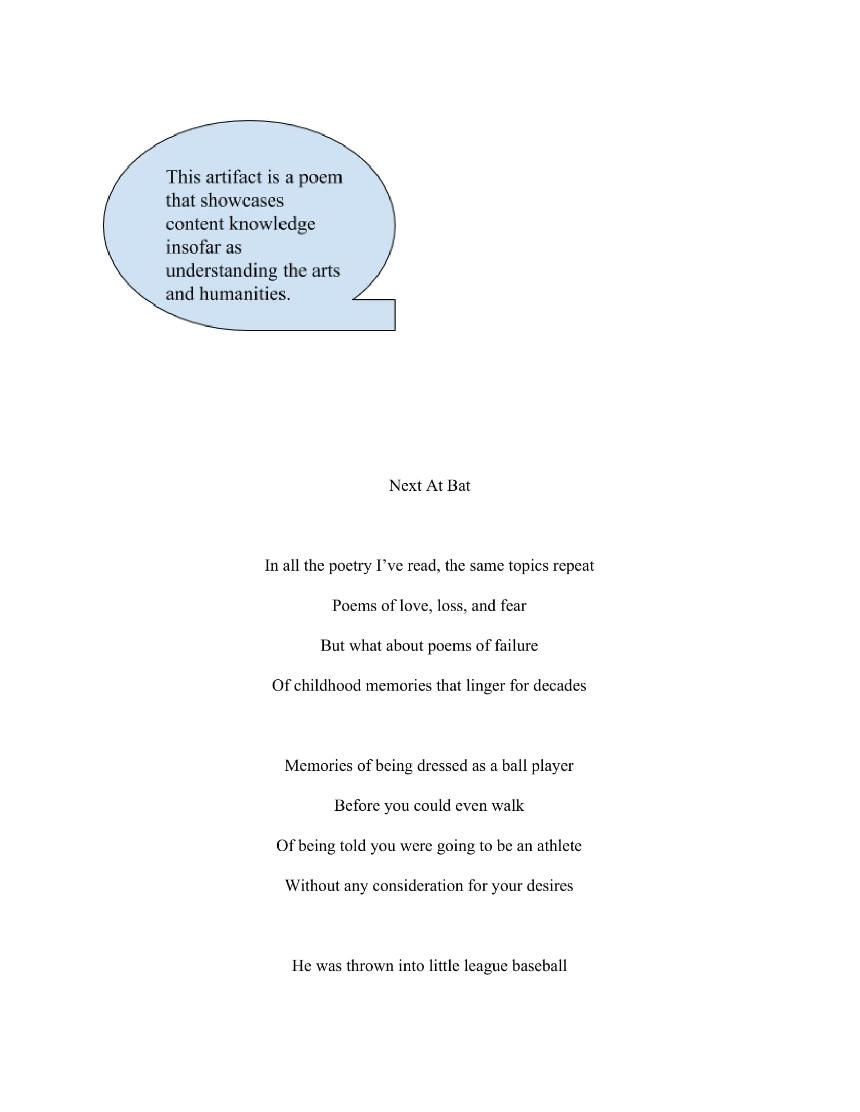
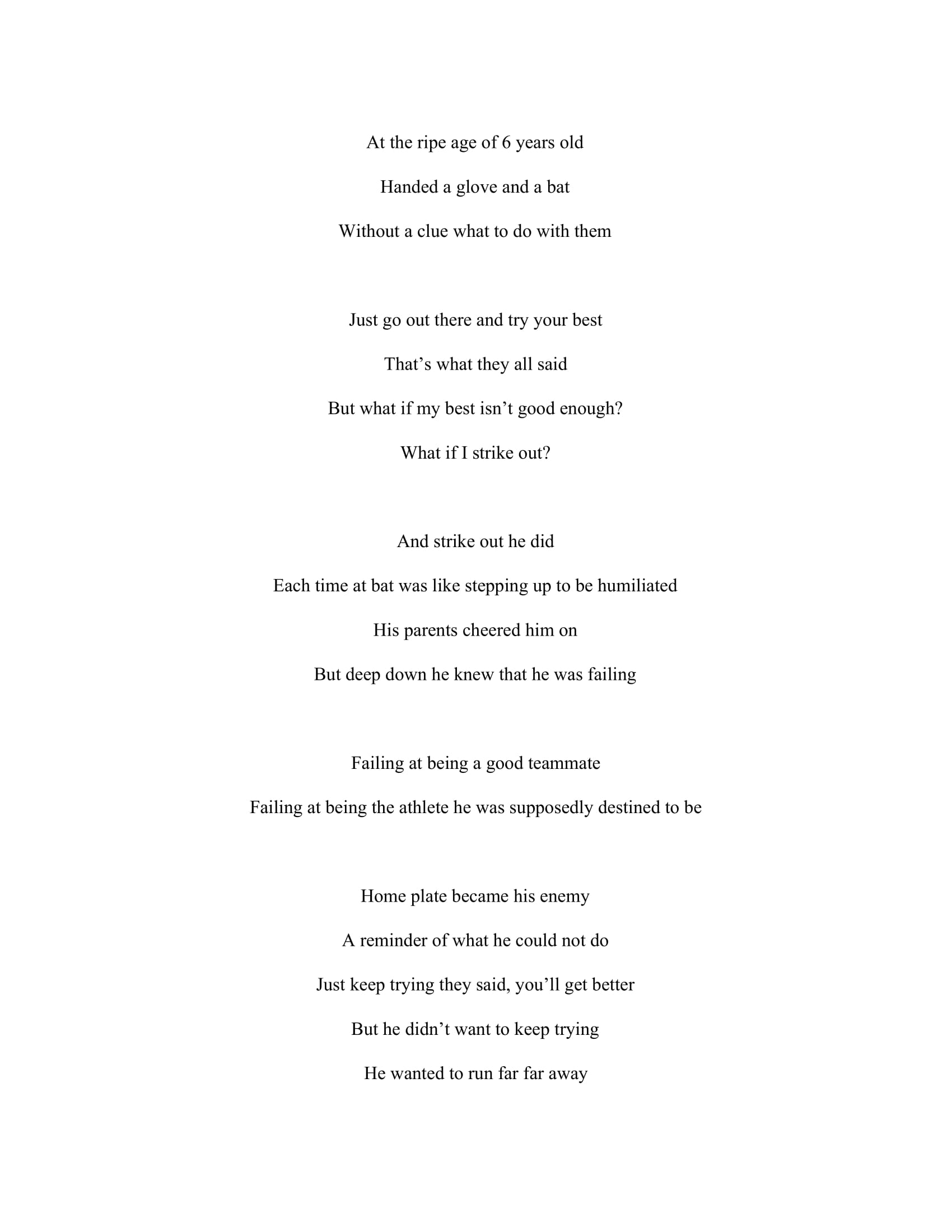

Content Knowledge Artifact 3 showcases a poem that may examine cultures inside and outside of North America in correlation to how individual's internal thinking processes are developed, and further, how their environmental conditioning may affect their daily pursuits in professional, personal, and recreational (leisure time) domains. In connection to liberal arts and content knowledge, understanding social sciences and humanities with respect to cultures inside and outside of North America, such as Europe, is important to form global cultural competencies and understanding of norms and values thereof. In connecting the artifact to the occupation of a fisherman, in a global sense, understanding cultural competencies and applying them in a multicultural domain is crucial not only for organizational success and productivity but also in applying ethical and moral considerations for others. Content Knowledge Artifact 3 showcases Foley's abilities in internal thinking processes. Internal thinking processes are important to understand in correlation to how different regions and demographics operate in a day-to-day setting. As a fisherman, understanding different social, political and economic aspects of different regions, is important insofar as how one operates a business
© Copyright Ryan F Professional Presence